
The Boros Bunker in Berlin is a singular cultural phenomenon where art, history, and architecture converge in a way that has no direct parallel, even on an international scale. Simply put: there is no other place like it in the world. As an internationally unparalleled destination, the Boros Bunker encapsulates the meeting of history, art, and place, cementing its role as one of Berlin’s most vital and uniquely memorable cultural institutions.

Foto: Boros Collection, Berlin © NOSHE
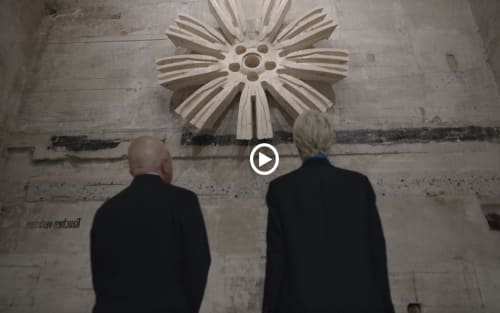
Once a World War II air-raid shelter, later a Soviet prison, during the cities separation a storage facility and finally an iconic techno club in the 1990s, this imposing structure now houses one of Germany’s most compelling private art collections.

Foto: © Max von Gumpenberg, Karen and Christian Boros
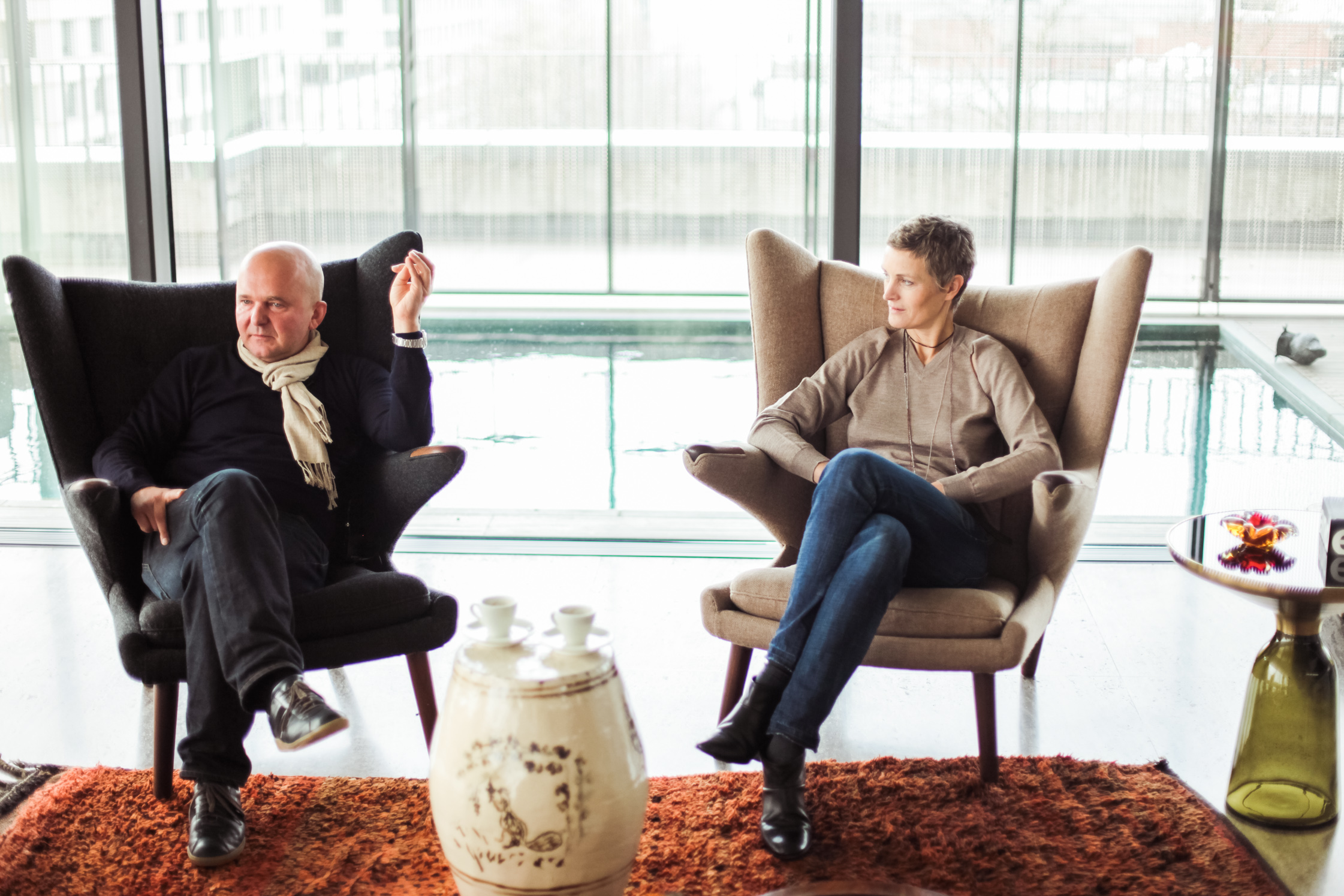
Christian and Karen Boros, who own and curate the collection, have repurposed this raw, brutalist building into a stark yet evocative art destination that defies the conventions of traditional galleries, making it a unique space not only in Berlin but across the global art landscape.
Christian Boros, a Polish-born advertising magnate and fervent art collector, discovered the bunker in 2003 immediately recognized its potential for transformation. Together with his wife, Karen Boros, he initiated an ambitious project to convert the bunker from a relic of wartime into a space dedicated to contemporary art. Along with architect Jens Casper, they reimagined the bunker’s five-foot-thick concrete walls and labyrinthine layout, stripping it down to its essentials and redesigning it to showcase art in a setting that is unmatched in atmosphere and intensity. Their transformation of this grimly historic space into a high-profile art destination took five years, culminating in a gallery experience that is unprecedented internationally.

Foto: Boros Collection, Berlin © NOSHE, Klára Hosnedlová, Untitled, 2020
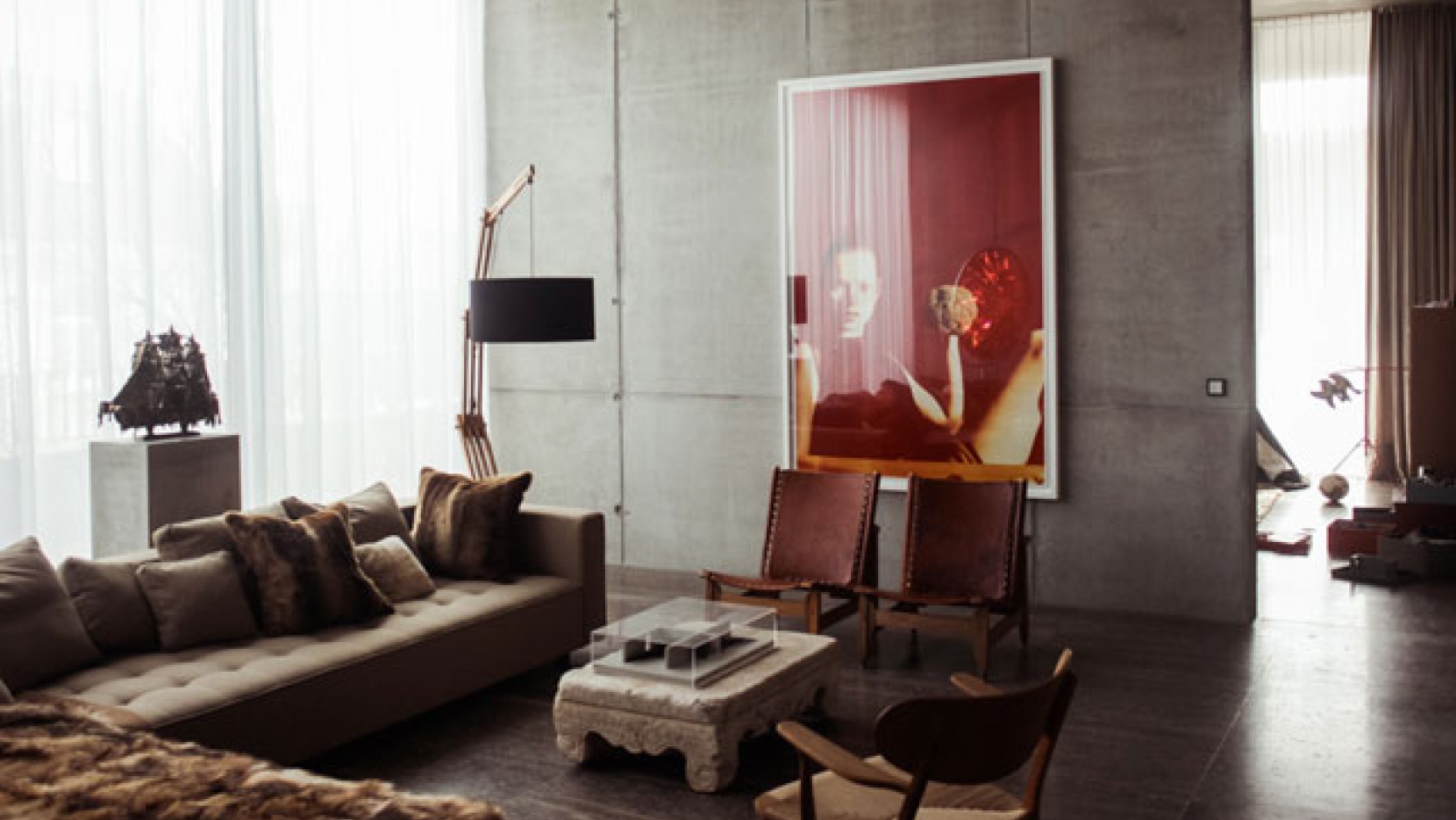
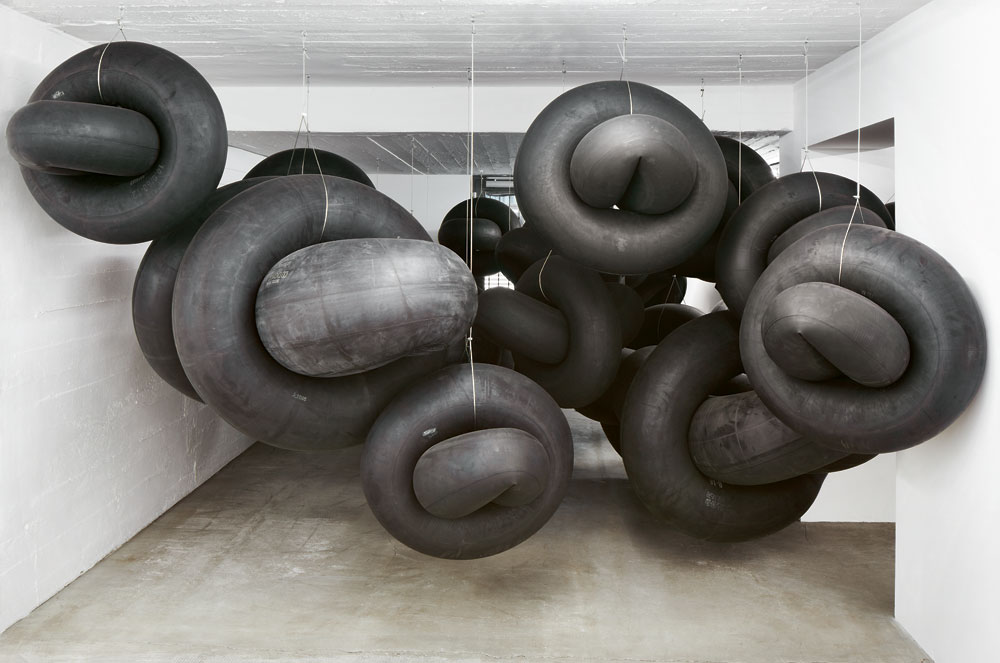
Occupying 80 rooms over five floors, each artwork in the Boros Collection seems to interact with the bunker’s uncompromising architecture. The space itself, with its shadows, thick concrete walls, and austere lines, shapes the experience of each piece, making the art feel almost alive within its rugged environment. In no other art venue does the building play such an active role in setting the tone for the artwork. The Boros Collection’s unorthodox venue challenges artists to push beyond traditional boundaries and engage with the space as an integral part of their work. This symbiosis between art and architecture positions the Boros Bunker as a destination that is incomparable in its scale, vison, ambition, and impact.
Unlike typical art spaces that favor clean lines and controlled lighting – often referred to as the “white cube”, the Boros Bunker offers a raw, almost cinematic experience. The bunker’s structure is both a canvas and a container, its brutalist character amplifying the art it houses. This approach to curation makes the bunker internationally distinctive, as no other venue pairs contemporary art with such an unfiltered connection to history and architecture.

Foto: Boros Collection, Berlin © NOSHE, Cyprien Gaillard, Lesser Koa Moorhen, 2013
In interviews, Karen Boros has noted that the imperfections and scars of the bunker’s walls were essential to their vision, creating a dialogue between the art and the building that can be experienced nowhere else. “The bunker makes no concessions,” she has said, “and neither does the art.”
The Boros Bunker also embodies Berlin’s post-reunification ethos of cultural reinvention, aligning itself with a city that has become a global center for contemporary art. As Berlin continues to attract artists, curators, and audiences worldwide, the bunker stands as a symbol of resilience and transformation, representing a distinctive merger of past and present.
For Christian and Karen Boros, this monumental structure was a personal mission to celebrate Berlin’s unique spirit through art, creating an experience that transcends what is typically expected in contemporary art spaces.
This remarkable space, accessible only by guided tours (booked out for months ahead), is an experience of controlled immersion, where each artwork is given space to breathe and to challenge. The bunker’s limited access adds an air of exclusivity and respect for the art and space alike, transforming each visit into something of a pilgrimage—a rare opportunity to engage with art in a setting where every room reveals a new perspective on Berlin’s past and the potential of contemporary art.

Foto: Boros Collection, Berlin © NOSHE, Anna Uddenberg, Rona’s Revenge, 2020
The fourth exhibition of the Boros Collection, titled “Boros #4,” offers a compelling exploration of contemporary art. This exhibition, running until March 31 2026, features works by 27 international artists, each engaging with themes of human embodiment, technological integration, and societal transformation.
The exhibition includes a diverse array of media, such as sculpture, installation, painting, drawing, video, and photography. Notable artists and their contributions include:
Jean-Marie Appriou: Known for his enigmatic sculptures that blend human and natural forms, Appriou’s works invite contemplation of the human condition.
Julian Charrière: His installations often address environmental themes, prompting reflections on humanity’s impact on nature.
Eliza Douglas: Douglas’s paintings and performances challenge traditional notions of identity and representation.
Anne Imhof: Renowned for her performance art, Imhof’s pieces in this exhibition delve into themes of power and alienation.
Alicja Kwade: Kwade’s installations play with perceptions of reality, often incorporating everyday objects to question materiality and time.
Bunny Rogers: Rogers’s works explore themes of adolescence and digital culture, reflecting on personal and collective experiences.
Anna Uddenberg: Uddenberg’s sculptures critique contemporary consumer culture and the commodification of the body.
These artists, among others, contribute to a cohesive narrative that examines the intersection of the human body with technological and societal changes.
Visiting/ Booking a Tour:
Visits to the Boros Collection are exclusively through guided tours, which require prior booking. Tours are available from Thursday to Sunday and can be reserved via the official website. The 1.5-hour tours are offered in both English and German, providing insights into the exhibited works, the history of the building, and its architectural background.
www.sammlung-boros.de/en/booking
Website: