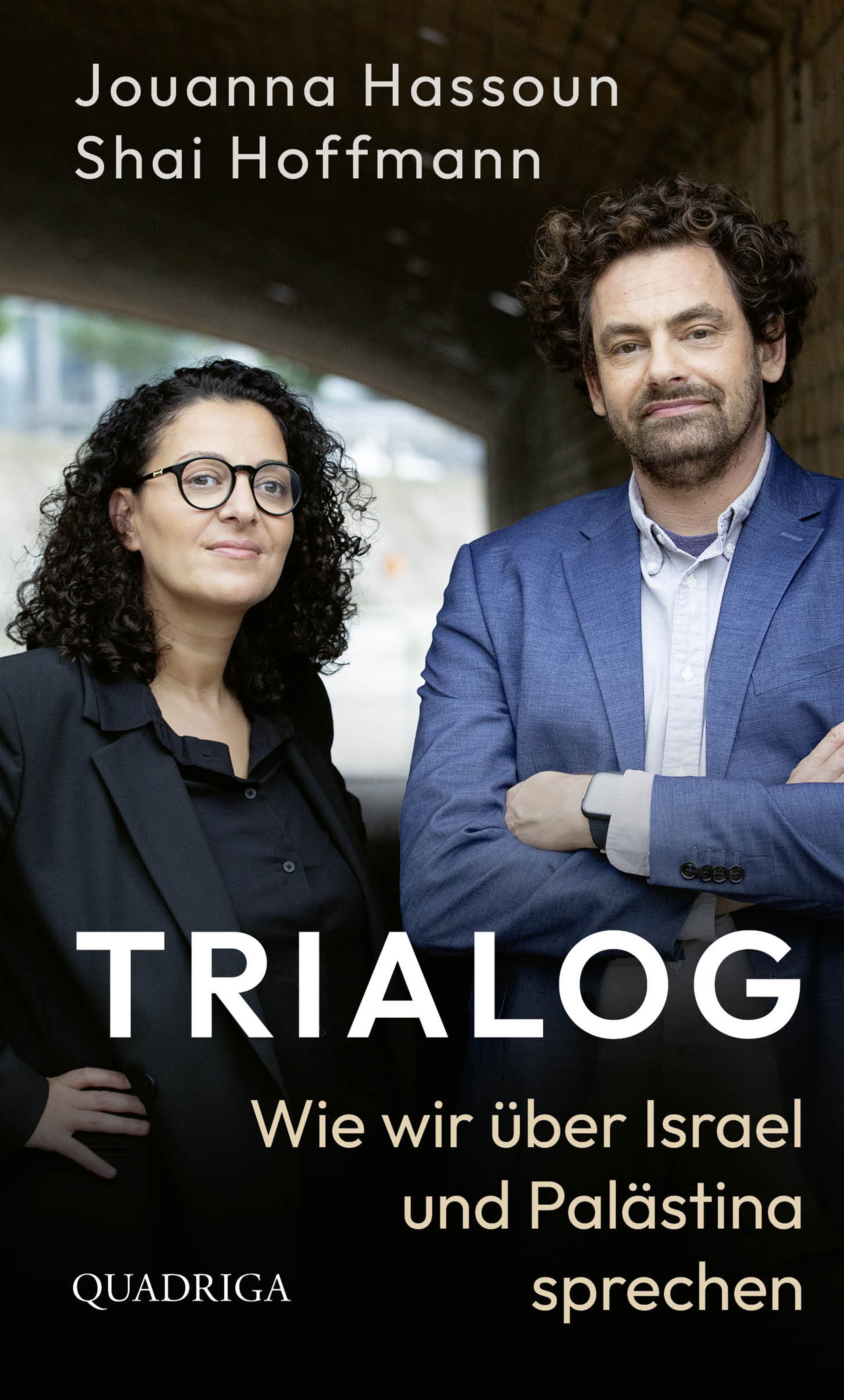
In a time when conflicts are often framed in black-and-white terms and debates are shaped by emotions and entrenched positions, meaningful dialogue has become a rare commodity. This is exactly where Shai Hoffmann steps in. With his project Trialog, he creates spaces for encounters and understanding between Jewish-Israeli and Palestinian perspectives—particularly in schools, where such conversations are most urgently needed.
Hoffmann’s path to this work was anything but linear. From actor to crowdfunding expert to social entrepreneur, he has drawn on his diverse experiences to initiate projects that create visibility, foster awareness, and drive real societal change. “Having an idea isn’t enough,” he says. “I need to think about how to engage the media and visual storytelling to make sure it reaches people.”
So how did Trialog come to life? What are his experiences in schools? And what can we learn from these encounters? A conversation about bridge-building, challenges, and the hope for a more respectful debate culture.

© Shai Hoffmann
Shai, was October 7, 2023, the catalyst for the Trialog project?
The Hamas attack on Israel changed a lot. But even before that, we had been working on educational materials and videos to promote intercultural understanding. After October 7, we asked ourselves: What more can we offer, especially given the highly emotional atmosphere in schools and teachers’ lounges? That’s when the idea of Trialog was born—a structured conversation between Jewish Israelis and Palestinians. On October 25, 2023, we held our first school session. Since then, we’ve been constantly on the move, and now, it’s not just us but also our dialogue partners who are carrying these discussions forward.
What kind of students do you encounter in schools?
The groups are very diverse. Some students have strong family or religious connections to the conflict and engage deeply with it. Others feel completely overwhelmed and frustrated by the expectation to take a stance. And then there are those who already have very fixed opinions—often highly emotional and resistant to alternative perspectives.
But we also experience surprising moments: Many students tell us after our sessions that they never expected a Jewish person to stand up for Palestinians or a Palestinian to show an interest in Jewish culture. These “aha” moments reassure us that Trialog is exactly what’s needed.
Is there anything that particularly worries you?
Yes. We must not underestimate the impact of social media on young people’s perceptions. The dominant narratives there are often extreme and one-sided. This strengthens radicalization tendencies and makes it increasingly difficult to have open, nuanced discussions.
Additionally, we’re seeing the long-term effects of schools avoiding discussions about the Israeli-Palestinian conflict. For years, many teachers avoided the topic out of uncertainty or fear. Now, we’re dealing with major gaps in students’ knowledge, which leaves room for misinformation and simplistic explanations to take hold.
How can we foster a better debate culture?
We would love to see people listening more to those directly affected by the conflict, rather than prioritizing their own opinions. We should all ask ourselves: Where do I have blind spots? What narratives have I uncritically accepted?
If more people were willing to critically examine their own positions, we could have debates that are calmer, more measured, and ultimately more respectful.
What role do teachers play in this process?
A crucial one. Educators and social workers are key in shaping young people’s understanding. They need to feel confident in facilitating these discussions. That’s why we also offer training programs for teachers—because only when they are well-equipped can they help students form informed and balanced opinions.
“If we stop talking, we lose each other.”
With Trialog, Shai Hoffmann demonstrates that it is worth engaging in difficult conversations. In an era of increasing polarization, we need spaces that foster encounters and mutual understanding.
His approach isn’t about resolving conflicts—it’s about enduring them. About resisting the temptation of easy answers. About making room for nuance.
Because, as he puts it: “If we stop talking, we lose each other.”