A son at the canvas, a friend from art school, a chorus that sings on after a loss. On the people in the background, and why so much would stop without them.
The image of the solitary creator is a stubborn one: the poet in the attic, the painter who sees no one for days, the composer still at the piano long past midnight. It is a lovely picture, and it holds some truth. In the end, someone does sit alone in front of the blank page. But listen to people who have painted, written or sung for decades, and a different story begins to emerge. There is almost always someone else nearby, and that someone is doing more than keeping them company.
Take Frank Bowling. He has been painting for seven decades and now works from a wheelchair. In his London studio, his son Ben stands at the canvas and sprays color wherever his father wants it. The painting begins in one man’s mind and reaches the canvas through another man’s hands. You could see that as a loss. You could also see a body of work that keeps growing because someone lends his hands where his father’s no longer reach.
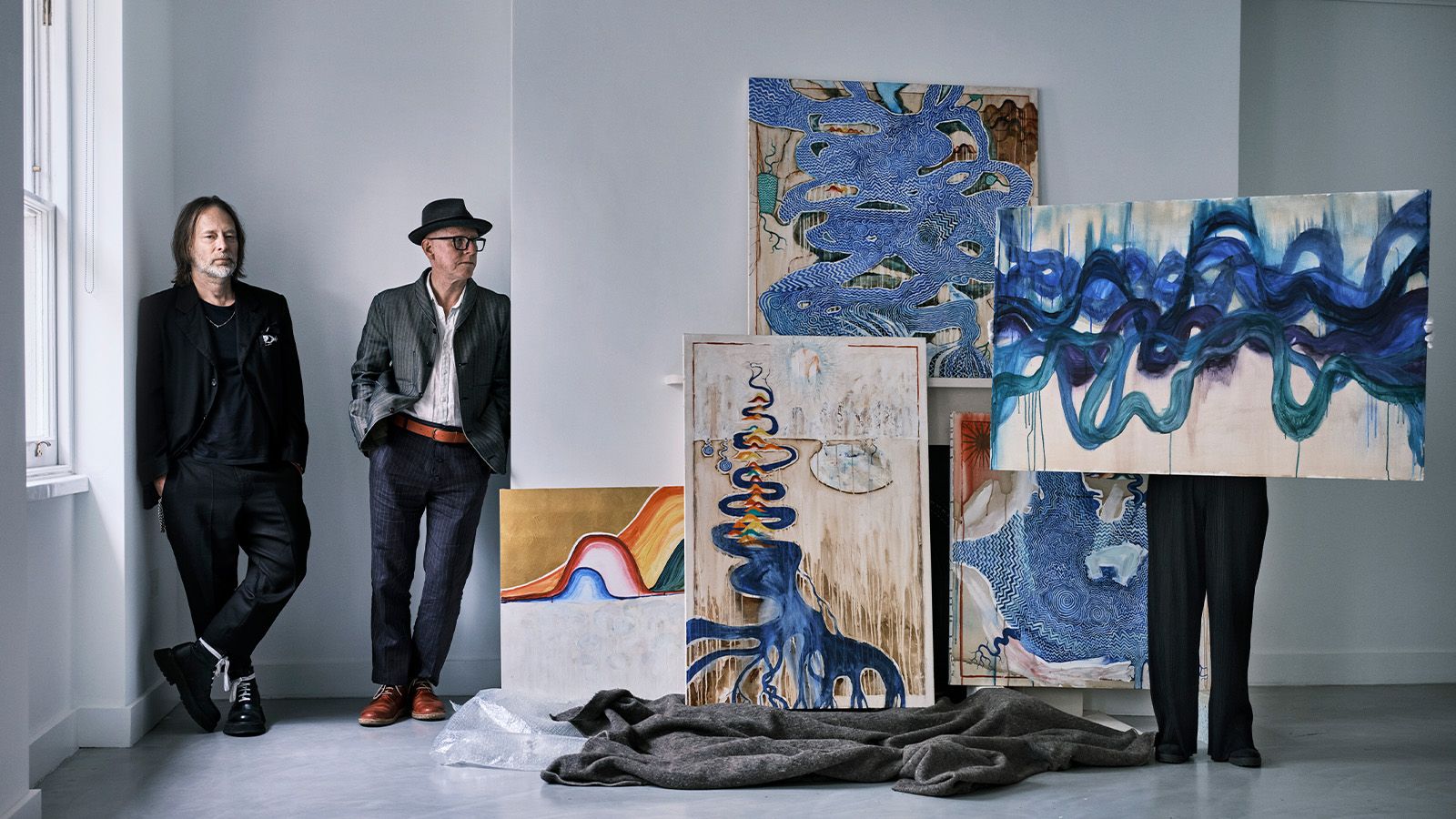
Not all help arrives so gently. Thom Yorke and Stanley Donwood have known each other since art school in Exeter, and since The Bends they have made every Radiohead cover together. When they talk about the work, harmony hardly comes up. They try things and throw them out, produce a great deal of nonsense before anything holds, and regularly shoot down each other’s ideas. Thirty years on, they still make each other laugh. Anyone who works alone has to be their own sharpest critic, and very few of us manage it. A person you trust who is still willing to say no is a gift, even if it rarely feels like one at the time.
It gets closer still when two people work on the same page. Anne Lamott, the author of Bird by Bird, has written a book about good sentences with her husband, Neal Allen. In work like that, there comes a point when no one can say who wrote which line, and a point after that when it stops mattering. The book belongs to both of them, and to neither entirely.
Sometimes the most important person never works on the piece at all. In his essay on late bloomers for The New Yorker, Malcolm Gladwell tells the story of Ben Fountain, who left the law to write fiction and for a long time had little to show for it. What carried him through those years was his wife, Sharie. Some work takes time, a great deal of it, and for long stretches it looks like nothing. That is when it needs someone who believes in it regardless. This kind of support seldom makes it into the acknowledgments, and more may rest on it than we realize.
One person can believe in you. A group can do something else: it expects you. In the early 2000s the American psychiatrist Gene Cohen followed a community chorale led by professional musicians and compared its members with a group who did not sing. After a year, the singers said they saw their doctors less often, felt less lonely and were more active than the others. It was not a large or tightly controlled study. But it describes something familiar to anyone who has belonged to a choir, a writing group or a shared workshop. We grow through what is hard, and we keep coming back because on Tuesday someone will ask where we were.
Singing together for years also means saying goodbye. The Young@Heart chorus in Northampton, Massachusetts, lost two of its singers in the weeks before a concert that a film crew was following. Fred Knittle had rehearsed “Fix You” as a duet with one of them, Bob Salvini. That night he stood on stage alone, an oxygen line at his nose, and sang it anyway. Then the program went on. The chorus could not take away his grief, but it gave him a reason to stand up.
No one has to work in company. David Gentleman has spent half a century in the same Camden studio, and his advice is almost defiantly plain: work every day, even on holiday. For some, habit is company enough. And anyone who suspects it is too late for a new beginning can read how Sue Kreitzman, after many years as a food writer, became an artist.
Read side by side, the pieces in this collection reveal something easy to overlook. The others almost never do the work themselves, but they are the reason it continues. So perhaps the most important question, whether you are just starting out or long underway, is not how to become more disciplined. It is who will be sitting at the table on the mornings when nothing wants to work.